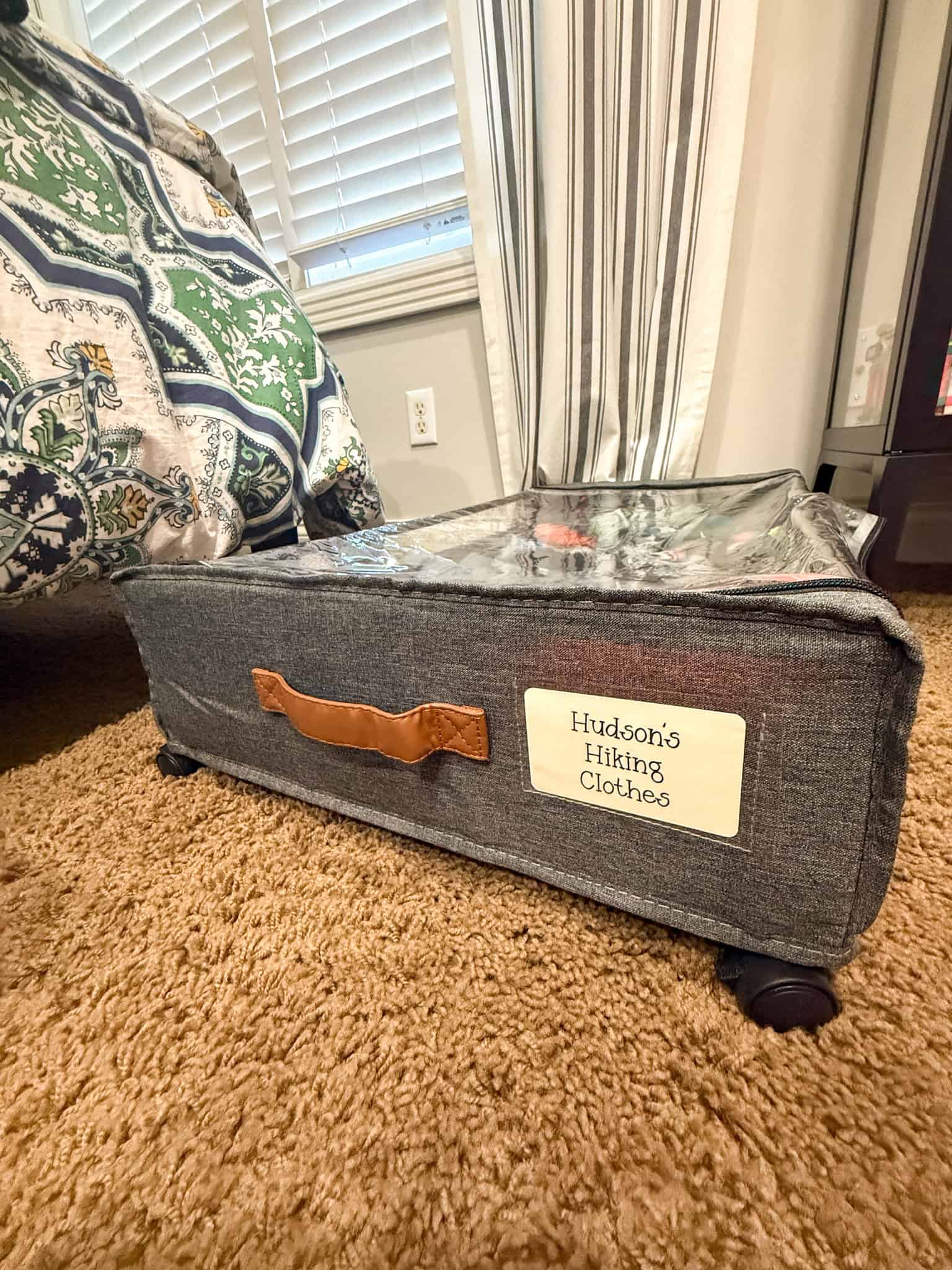
The Family Packing System That Fits 10 Days Into 2 Suitcases (Day-by-Day)
If you’ve ever stood in a hotel room at 10 PM digging through three suitcases to find one kid’s pajamas, this system is for you! Packing for a family vacation, especially a national park trip with multiple destinations, changing weather, and limited space, can feel like a logistical nightmare. But after one particularly humbling trip, we completely overhauled how we pack, and we’ve never gone back. This is our step-by-step family packing system. This is how we fit 10 days worth of stuff for four people into two suitcases and two Pelican boxes – packed by day so we never have to dig, repack, or haul more than we need.

The Trip That Broke Us
Our Southwest road trip to White Sands, Guadalupe Mountains, Carlsbad Caverns, and Big Bend was the trip that forced the change. We packed the way we always had, the way most families do. Each person had their our pile, organized loosely by type. Shirts together, pants together, that kind of thing. Sounds reasonable until you’re changing places every night and need something out of every single bag. We were hauling all of it inside each and every night, just to find one thing. By the end of the trip we were exhausted before we even got to the fun part.
This is how we had always packed, but something was different this time. The kids were getting bigger and more adventurous, so we had more gear and more plans – more than just the easy scenic drive hikes. After repacking for the fourth time, I started thinking about it differently. We needed a new family packing system.
The goal isn’t to pack by person or by item type. The goal is to never have to think about what to wear or where it is. Pack by day. Everything for Tuesday, all four of us, lives in one place.
Step 1: Start with the Itinerary, Not the Clothes
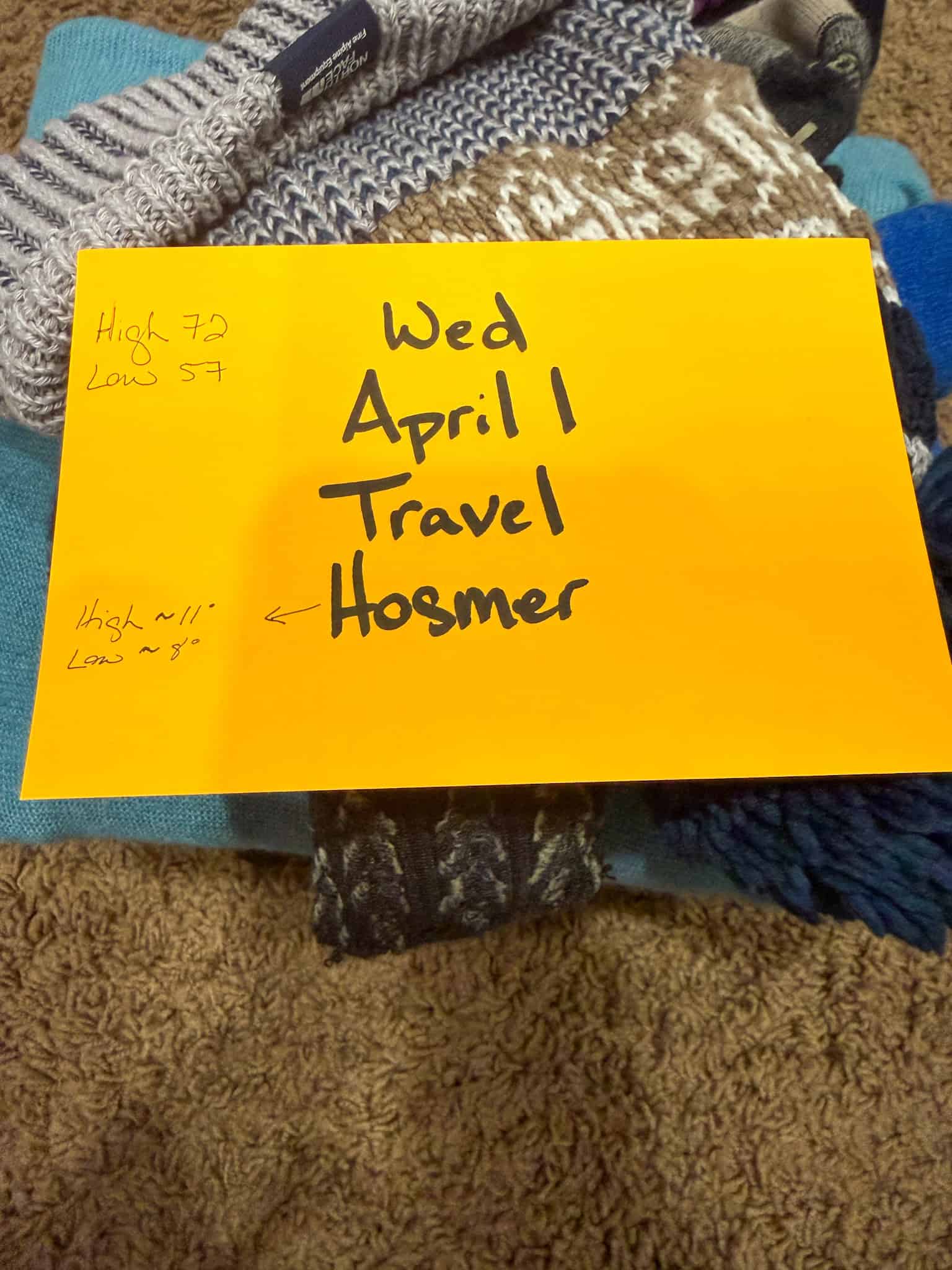
Before a single thing goes on the bed, I sit down with our trip schedule and pull up the weather forecast for each day and each destination. National park trips often span multiple climates. You might be at sea level in the morning and 10,000 feet by afternoon, or go from desert heat to mountain cold in the same week.
For each day, I write a note card with the date, the activity and location, and the forecasted weather. These notes become the backbone of the whole system. You’ll see why in a minute.
Step 2: Lay Everything Out by Day
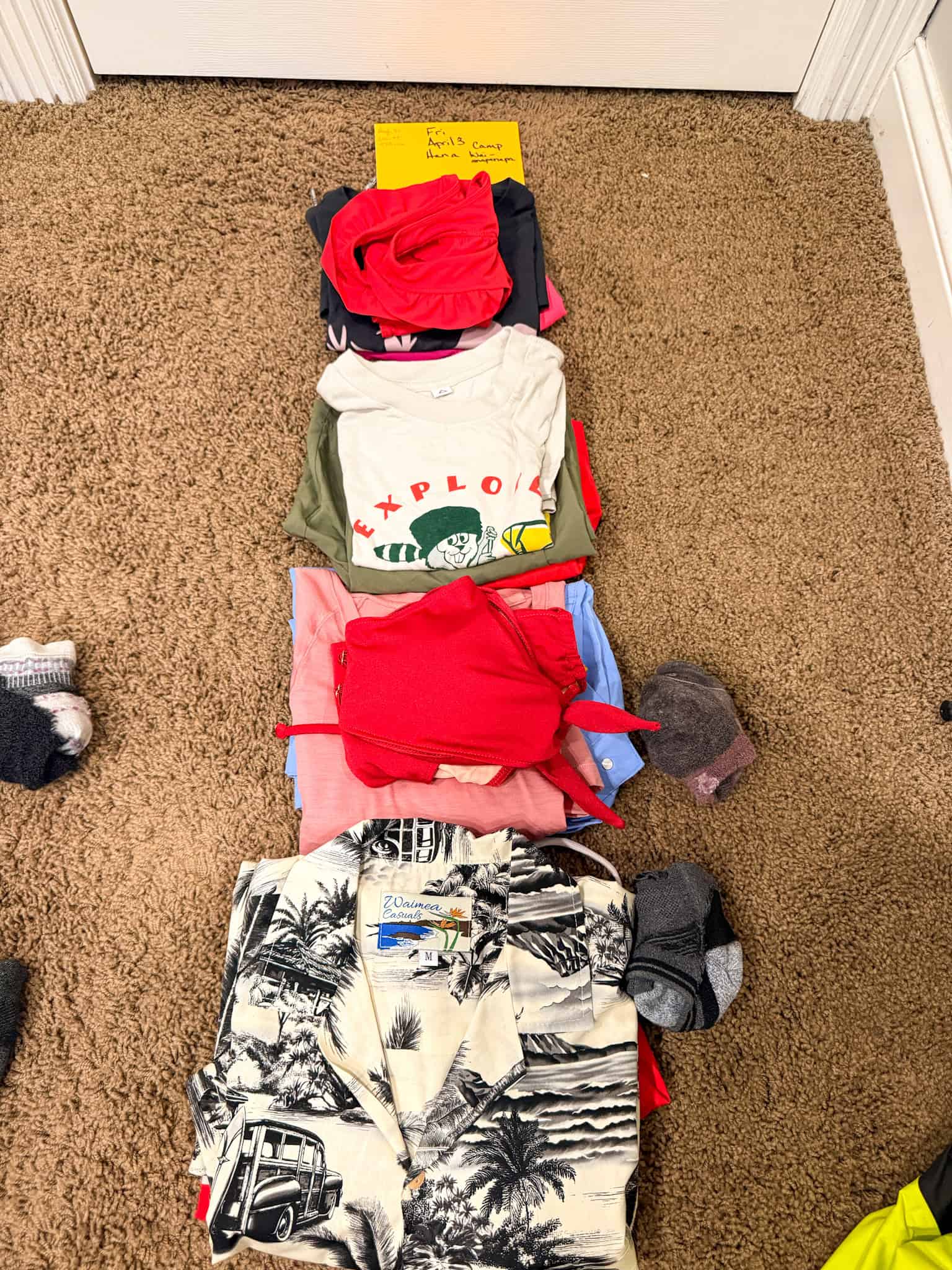
Now the clothes come out. I lay out the note cards across the bed and floor, then sort by day. Each pile on the floor represents one day for all four of us – every outfit, every sock, every layer – based on what we’re doing and what the weather will be. This also lets me coordinate outfits for everyone if we have a particular day I want pictures (think red swimsuits on the black sand beach in Hawaii).
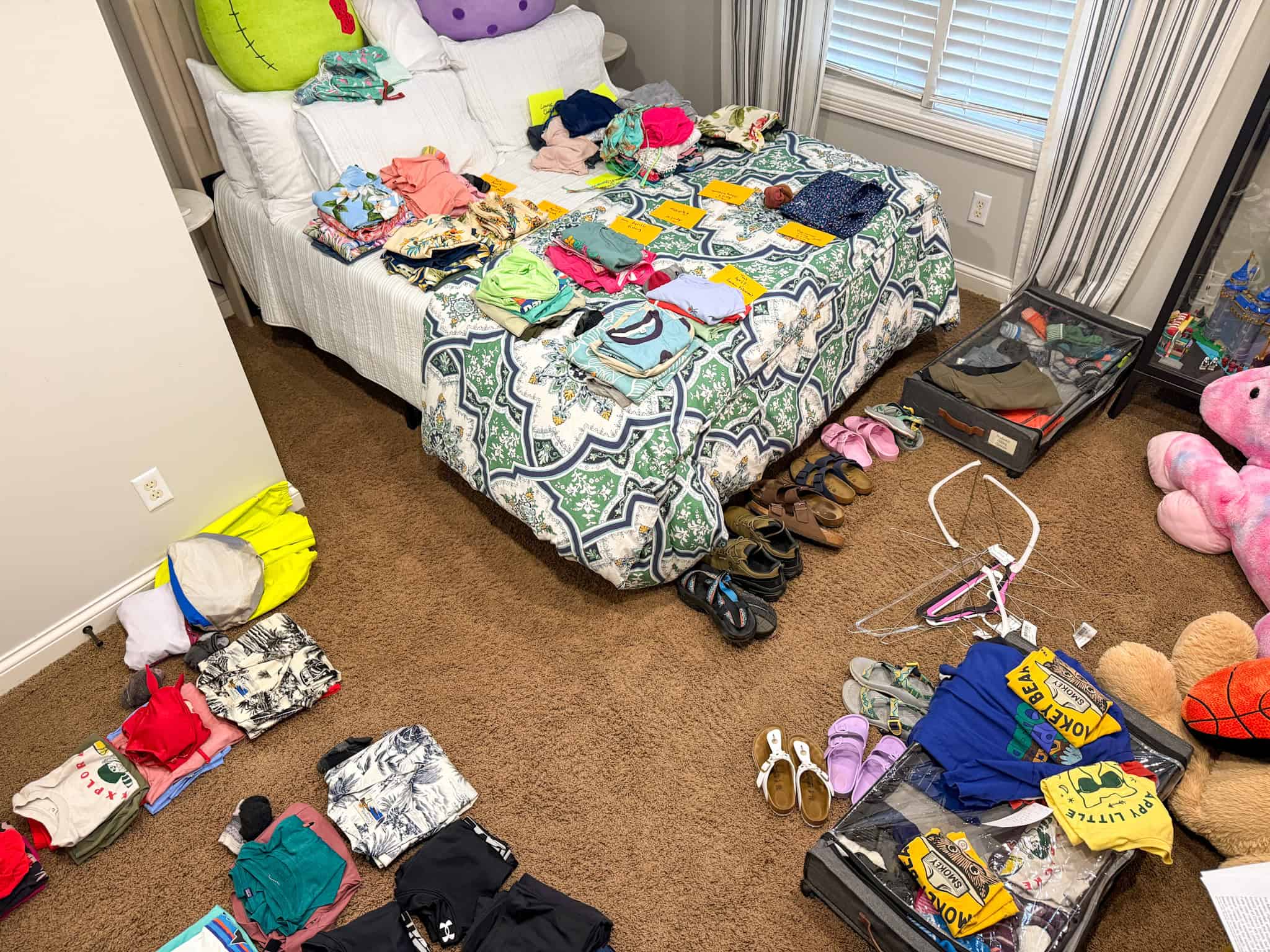
This is the part that looks like chaos from the outside. I promise it’s organized chaos. That note card at the top of each pile will travel with the clothes all the way into the suitcase so we can read it right through the packing cube window.
Step 3: Decide on Your Category Bags
Not everything packs by day. Some things get their own cube or bag by category. For us those are usually lounge clothes, pajamas, swimsuits, and extra clothes like rain jackets and backup layers. This makes those things you use on multiple days easier to find.
The key here is that these are family bags, not individual ones. One swimsuit cube has all four of our suits in it. One pajama cube has everyone’s pajamas. When we need swimsuits, I can grab one cube, not four.
Step 4: Pack the Cubes and Vacuum Bags
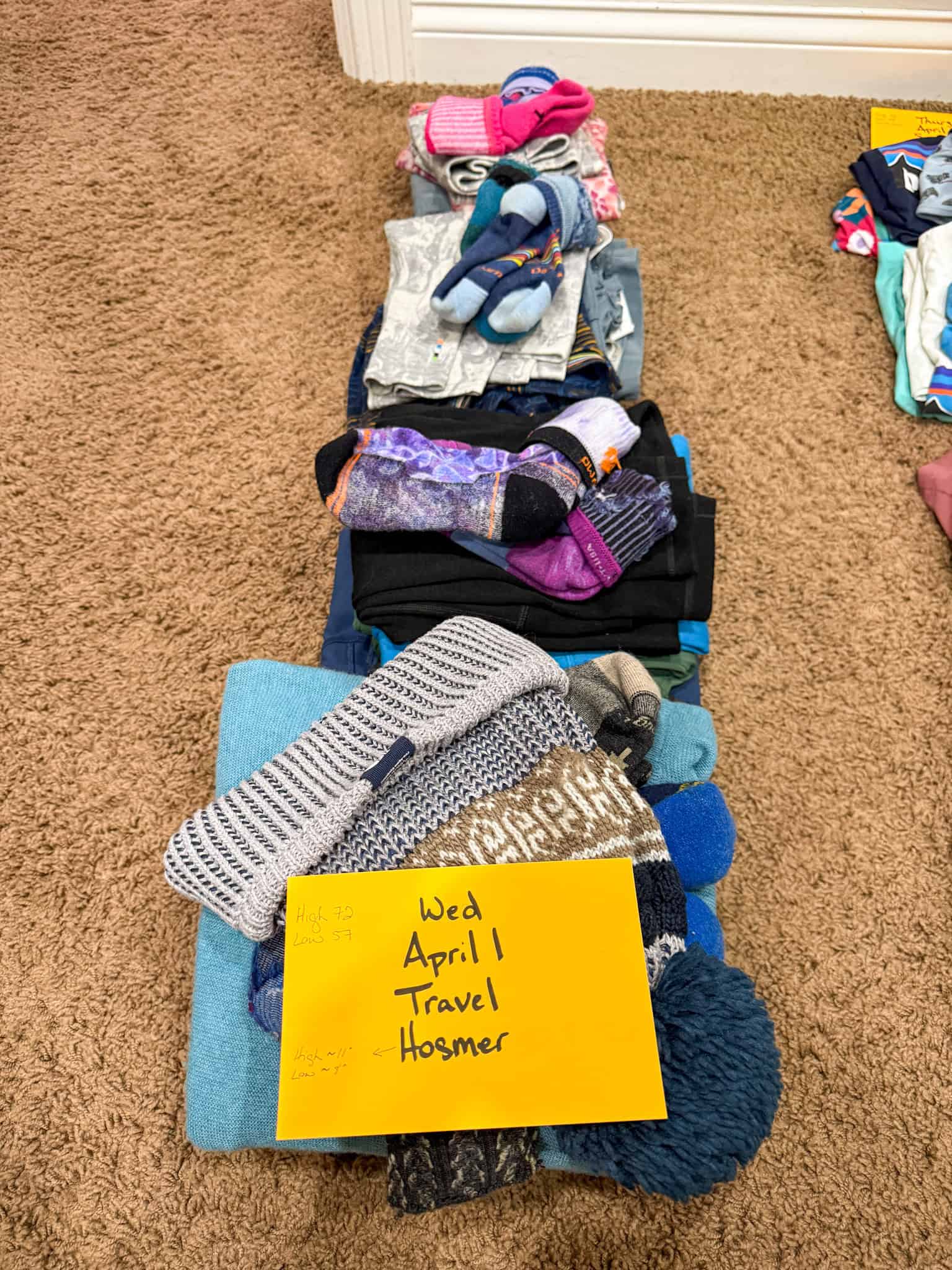
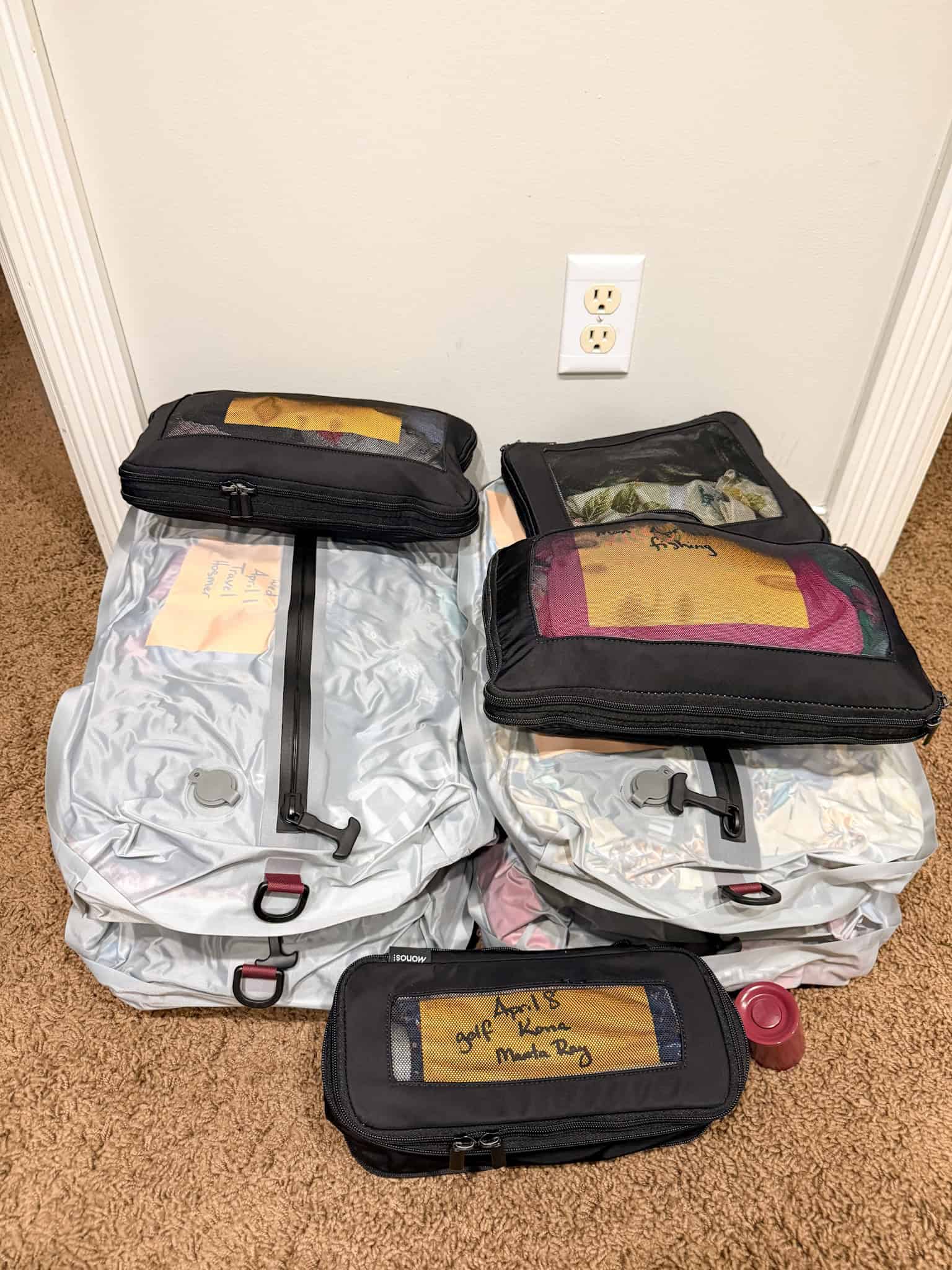
Each day pile now gets packed into its own packing cube. All four people, one day, one cube. The note card sits right on top so it’s visible through the window – no guessing, no digging.
For bulkier items like fleeces and mid-layers, we use vacuum bags instead of cubes. They compress down dramatically and the same rule applies: one day, all four people, label on top.
As we use each day’s clothes on the trip, the dirty clothes go right back into that empty cube or bag. No repacking. No reorganizing. The system runs itself.
Step 5: Split the Suitcases by Half the Trip
Here’s where it gets really efficient. Once everything is cubed and labeled, I load the suitcases by the first and second half of the trip. Our white suitcase gets days one through five. Our tan one gets days six through ten.
That means for the first half of the trip, only the white suitcase comes inside. The tan one stays in the car. When we hit the halfway point, we swap. We’re never hauling more than we need, and we’re never digging through ten days of clothes to find day three.
Step 6: The Pelican Boxes
The two Pelican boxes handle everything that isn’t clothes. Camping gear, hiking boots, water bottles – the bulky, sturdy stuff that doesn’t belong in a suitcase. We love Pelicans because they’re tough enough to take real abuse, they lock, and they have wheels so you can roll them right into camp. Toiletries stay in the suitcases since we need those every night.
Tips to Make Your Family Packing System Work
- Check the weather for each specific location, not just the general region. Mountain parks can shift dramatically between morning and afternoon.
- The day-by-day system only works if you commit to it at the start. The setup takes a couple of hours but saves so much time and stress on the trip itself.
- Empty bags are not wasted space – they’re where dirty clothes live. Don’t skip this part. It makes coming home so much easier!
- Vacuum bags are worth it, especially for anything fluffy. Fleeces, hoodies, and extra layers compress to almost nothing.
- Depending on where you’re staying and what you’re doing, you can rewear clothes. This cuts down on luggage too.
Bottom Line: Family Packing System (Day-by-Day Method)
This system took one really frustrating trip to figure out and about thirty seconds to explain to Garrett before he was fully on board. Now it’s just how we pack. The bedroom looks like a disaster for a day, the note cards look a little unhinged, and then everything clicks into place and we show up to the trailhead instead of a suitcase explosion. If you try it, let us know how it goes!
With light and love, Amber 🌿
