Hawaiʻi Volcanoes National Park Tips: What We’d Do Differently
After 33 national parks, I’ve learned that some parks show up exactly as advertised and some parks make you work for it. Hawaiʻi Volcanoes National Park is the second kind. We went in with a full day planned, solid expectations, and a dinner reservation. The clouds had other ideas, and the volcano did too. This post is the honest version of what it’s actually like to visit, because I think you’ll appreciate going in with realistic expectations more than a highlight reel.
We visited as park 33 on a rainy Tuesday in April, paired with the southernmost point in the United States and the green sand beach at Papakōlea — both of which are getting their own post because they deserve it. This one is just about the park.
Getting There
Hawaiʻi Volcanoes National Park sits on the Big Island’s southeastern side, about 30 miles from Hilo and 96 miles from Kailua-Kona. We were based in Kona, which made for a long driving day but a doable one. If you’re planning to spend serious time in the park, staying in Hilo puts you significantly closer and gives you more flexibility.
A few tips before you arrive:
- The Welcome Center is open 9am to 4:45pm and is currently serving as the temporary replacement for the Kīlauea Visitor Center during its renovation — check NPS.gov before you go for the latest
- Park entry is card or app payment only, no cash accepted
- An America the Beautiful Pass covers entry
- Download the NPS app and offline maps before you leave — cell service inside the park is unreliable
What We Did at Hawai’i Volcanoes National Park
We had a plan going in. Kīlauea Iki Trail, Thurston Lava Tube, Chain of Craters Road, dinner at The Rim. A full day, all mapped out.
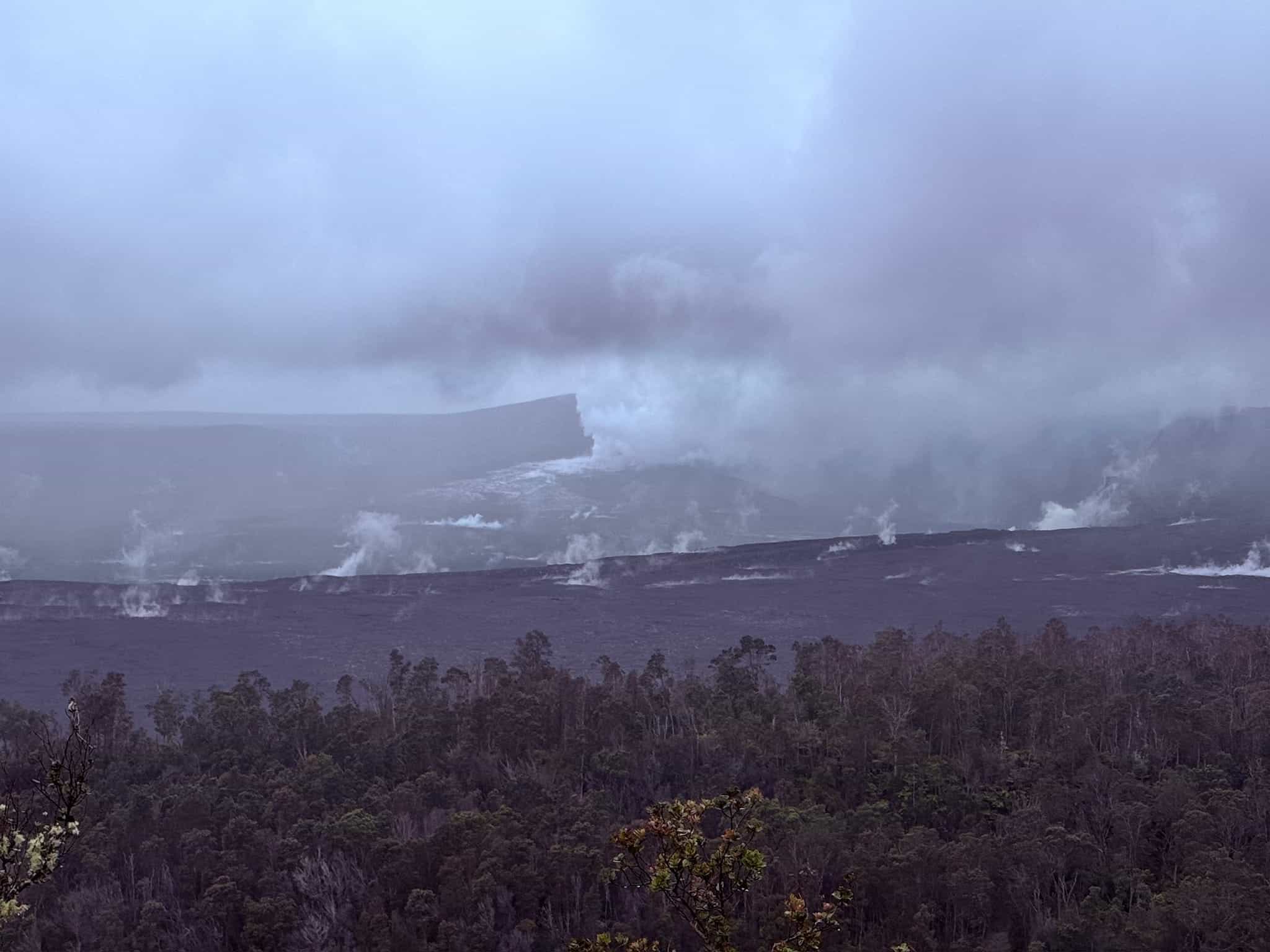
The clouds were sitting so low over the caldera when we arrived that we could barely see it. We adjusted and kept going.
Thurston Lava Tube
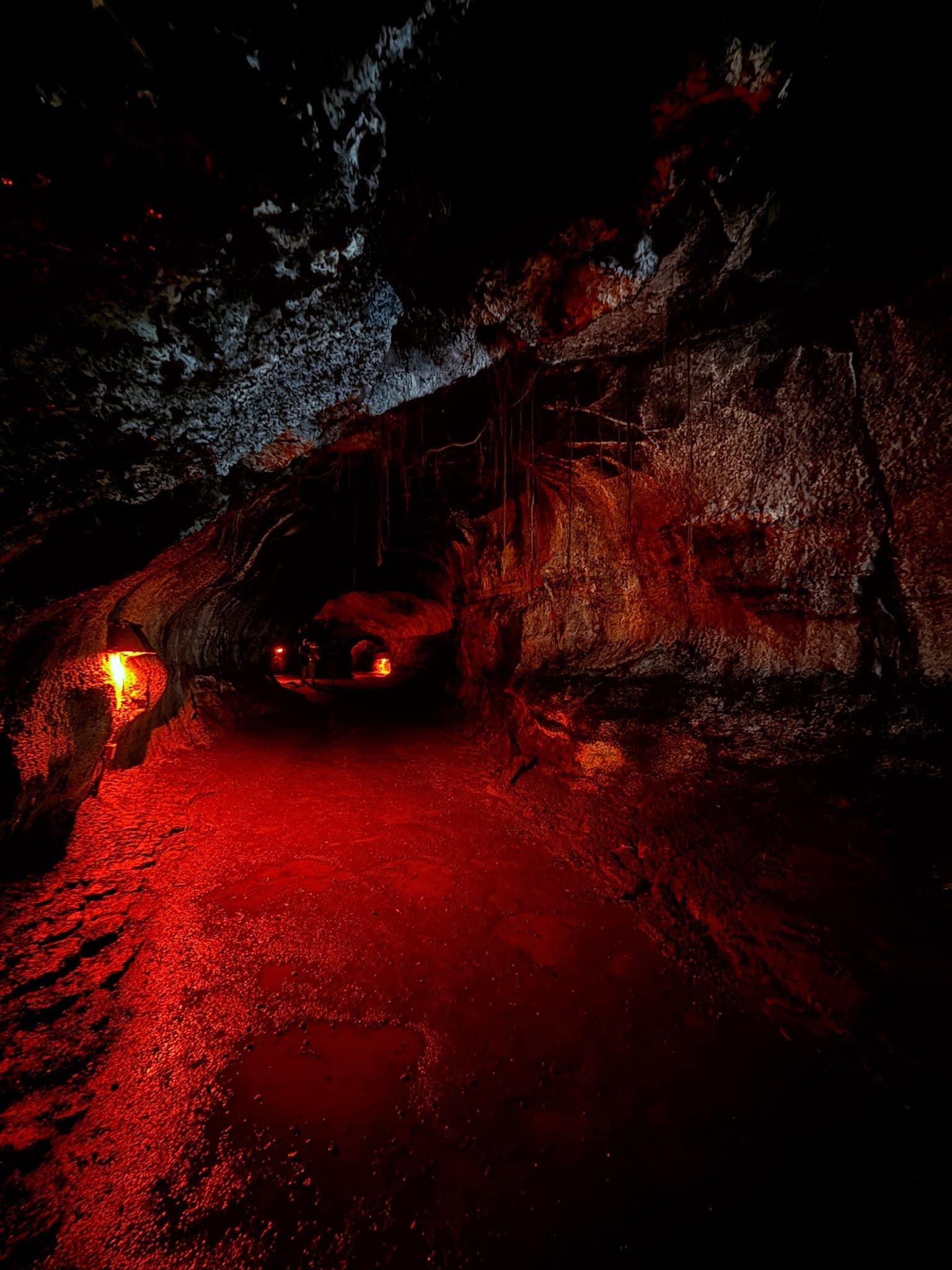
The lava tube is interesting for what it is more than what it looks like. A long underground tunnel formed when the outer edges of a lava flow hardened while lava kept moving through the inside, eventually draining out and leaving the hollow tube behind. Walking through it is cool in a geological sense — you’re inside something the earth made — but it’s a relatively short walk and not particularly dramatic. Worth doing for the context it gives you about how this landscape was formed, especially with kids who are learning about volcanoes for the first time.
Steam Vents and Caldera Views
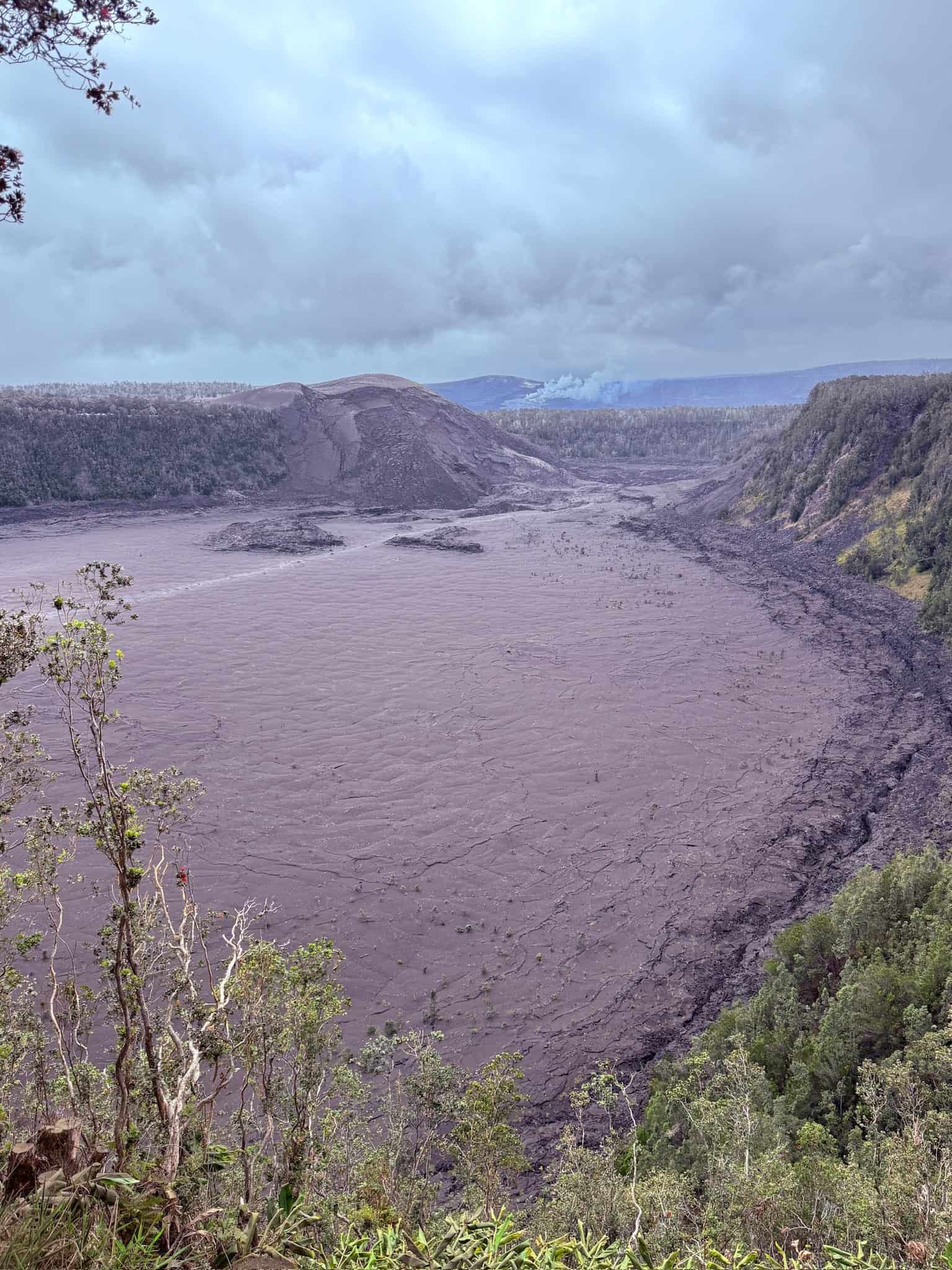
On a clear day the caldera views from the rim are supposed to be striking. We got clouds and steam and a lot of white sky. It was eerie in its own way, standing at the edge of something that massive and not being able to see the bottom of it. We didn’t feel cheated exactly, just aware that the park had decided to show us a different version of itself than we’d planned for.
Chain of Craters Road
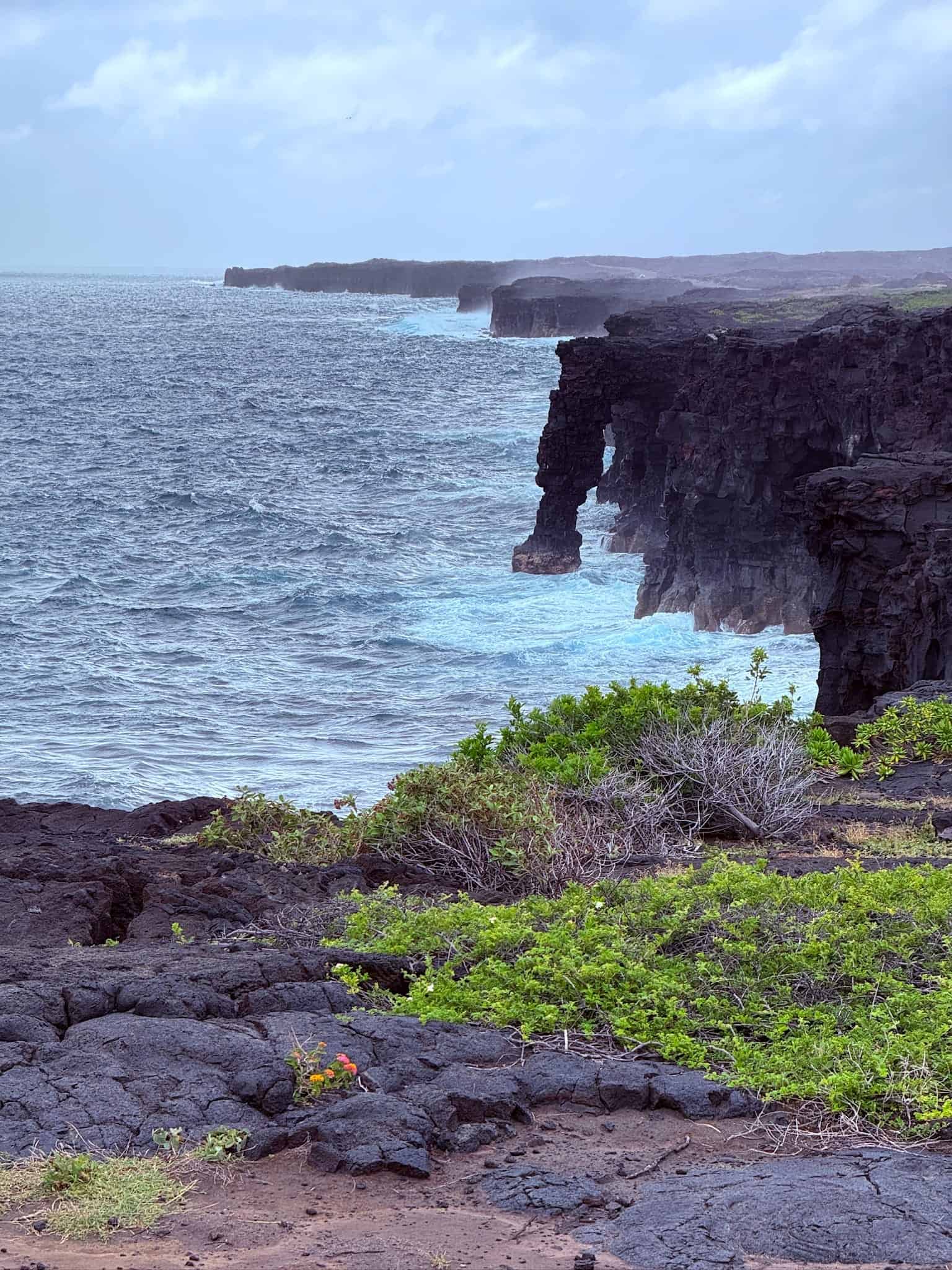
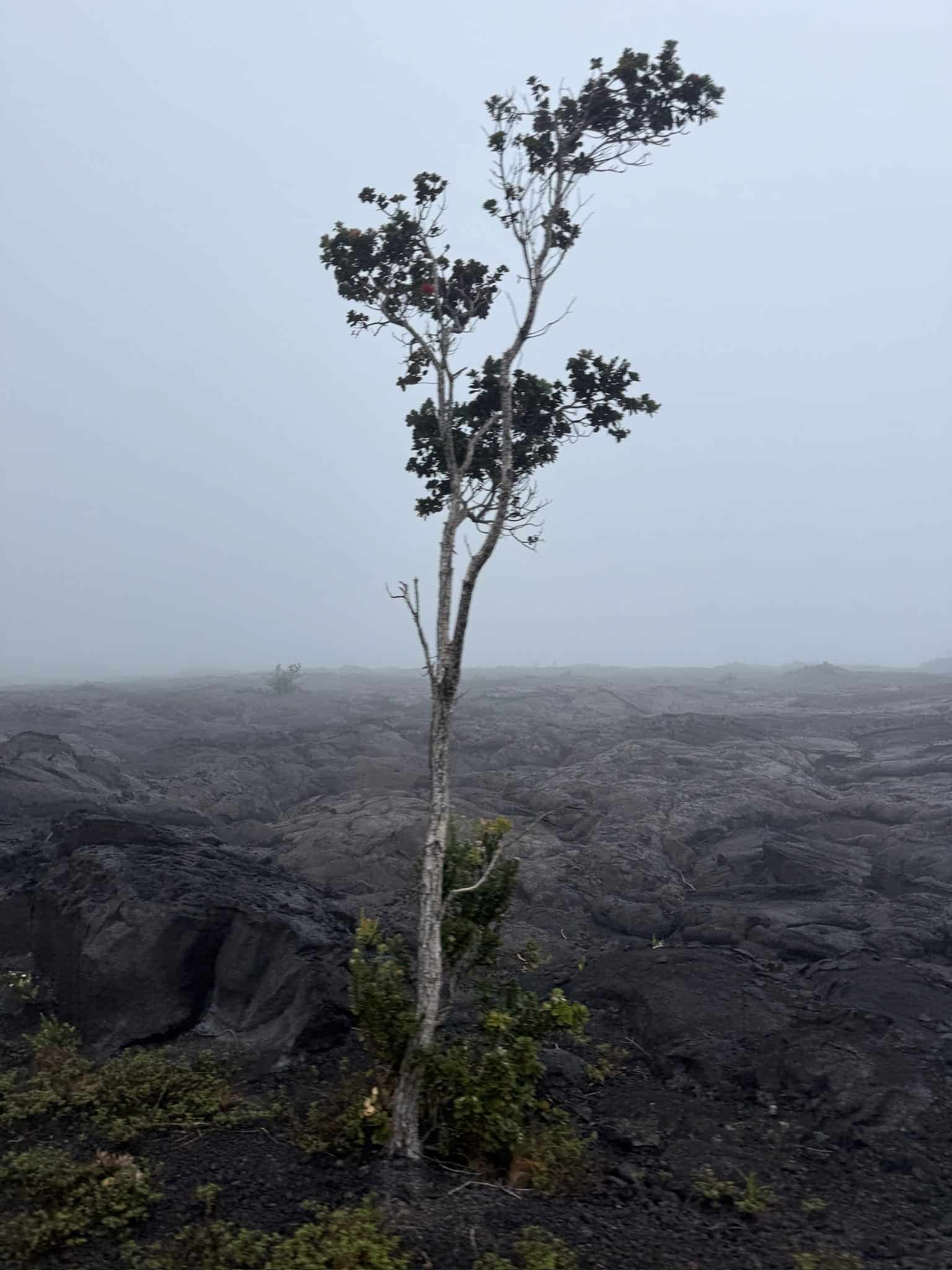
We drove Chain of Craters Road through the clouds, which meant the sweeping views across the lava fields were mostly obscured. What came through was the scale of it — mile after mile of hardened black lava stretching in every direction with almost nothing growing on it yet. It felt remote and a little desolate in a way that was interesting rather than impressive. The Holei Sea Arch at the end of the road is worth seeing. We’d read before the trip that it will eventually collapse into the ocean and there’s nothing to be done about it, so we talked to the kids about that on the way out. It’s the kind of fact that sticks.
Dinner at The Rim
The Rim is inside the Volcano House hotel on the caldera rim, and the view on a clear evening is the whole point of eating there. We didn’t get the view. What we did get was a waiter who was genuinely entertaining, patient with four tired kids at the end of a long day, and made the whole thing feel easy when it could have felt stressful. The food was fine. If you have time to just sit in the rocking chairs on the porch and watch the caldera, do that instead. If you need dinner and a view in the same stop, the restaurant gets the job done and you might get lucky with the weather in a way we didn’t.
The Morning After

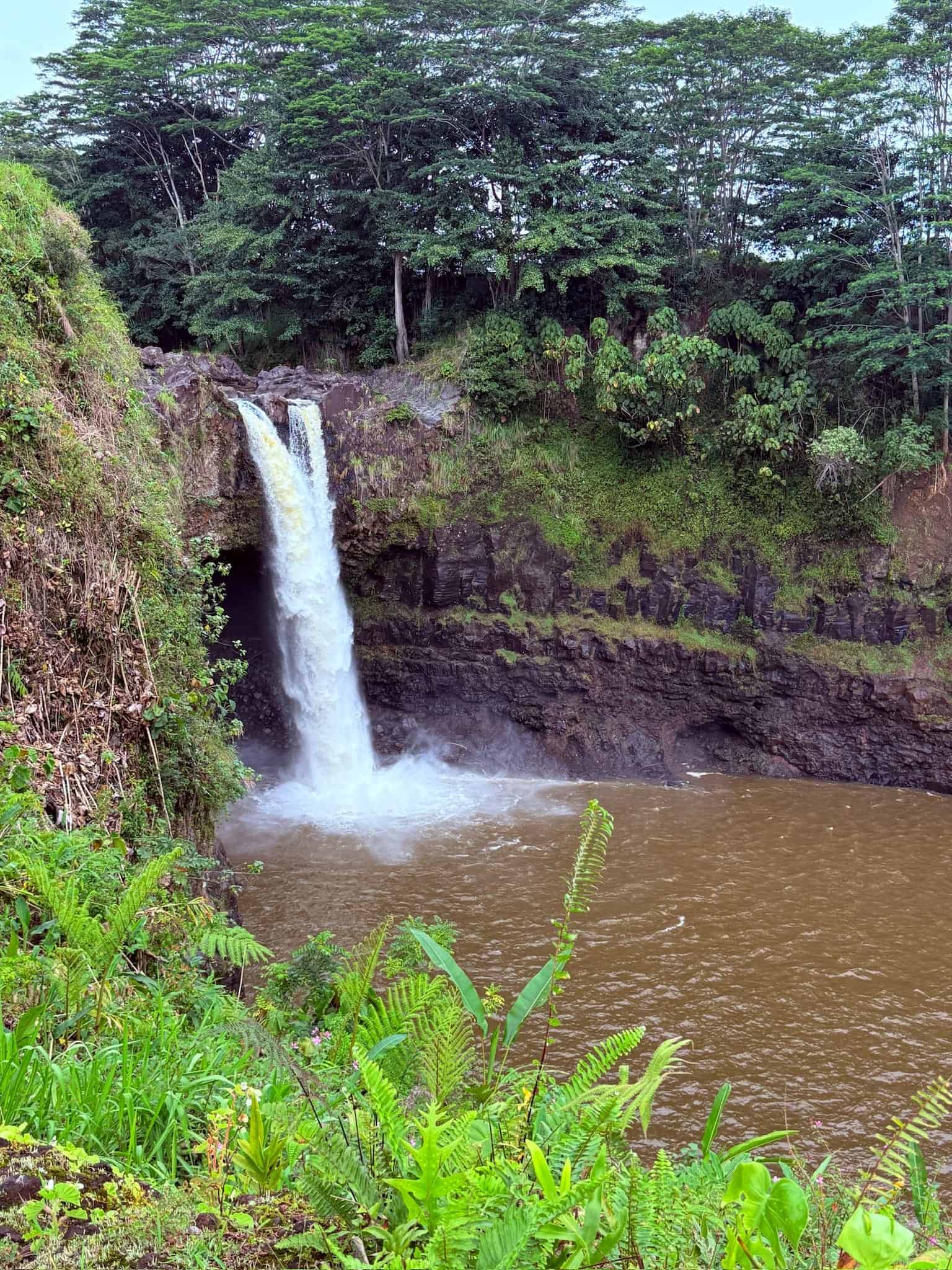
Our plan for the next day was Hilo — Rainbow Falls, Akaka Falls State Park, and whatever else we found along the way. We did both falls, which were genuinely beautiful and worth the time, and we had just sat down at Makani’s Magic Pineapple Shack with ice cream when Garrett’s phone started buzzing. He’d set up alerts for volcanic activity before the trip. Kīlauea was erupting.
We left the ice cream on the table and drove straight toward the park.
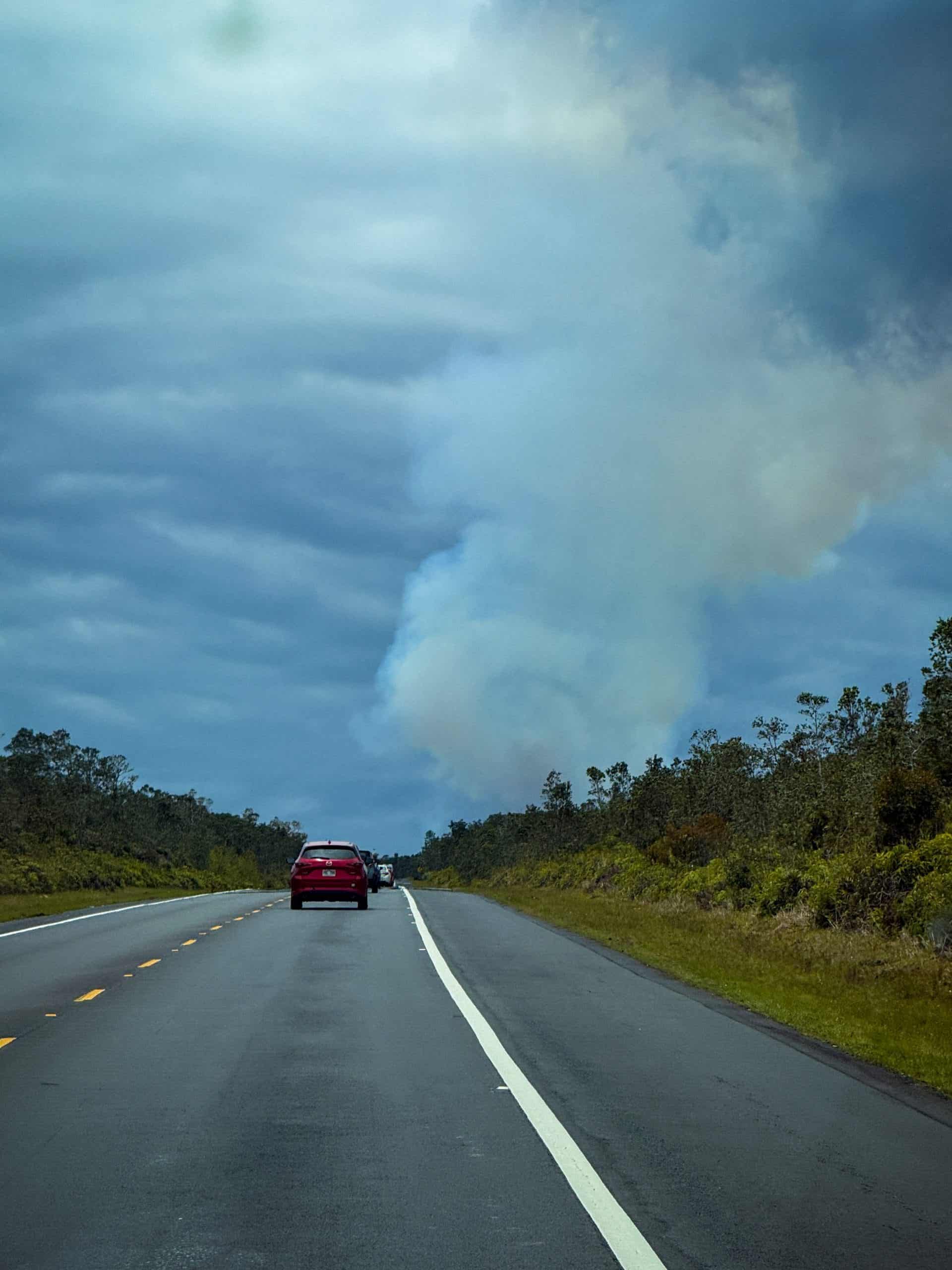
Two miles from the entrance an officer stopped us. The park was closed. Everyone in the car went quiet. The kids were genuinely sad in a way that surprised me a little — they’d been engaged all day but something about being that close and not being able to get in landed hard. We pressed our faces to the windows on the way out and tried to see something through the smoke. We didn’t get much.
Here’s the thing about this park — it will do what it wants. The weather doesn’t consult your itinerary and neither does the volcano. We saw some really remarkable things and we missed some too, and the morning after reminded us that this place is actually alive in a way that most places we visit are not. We’re going back. That feels like the only reasonable response.
Hawaiʻi Volcanoes National Park Tips: What We’d Do Differently
Give this park a full day with nothing else on the schedule. We combined it with two other significant stops and while we don’t regret any of it, the park deserved more time and more flexibility than we built in. The weather can change everything here and having room to adjust your day based on conditions makes a real difference. We also didn’t finish Kīlauea Iki Trail, which is first on the list when we go back.
What Else to Do in Hawaiʻi Volcanoes
Kīlauea Iki Trail
The one we didn’t finish. The trail descends into the crater, crosses the hardened lava lake floor left by the 1959 eruption, and climbs back out through rainforest on the other side. At 3.5 miles round trip it’s manageable for older kids and walking across a crater floor is an experience you can’t replicate anywhere else. This one is our first priority next visit.
Devastation Trail
An easy paved half-mile walk through a cinder field left by the same 1959 eruption. Good for younger kids and a good way to see the contrast between the barren lava field and the vegetation slowly coming back.
Punaluʻu Black Sand Beach
Not inside the park but close enough to pair with a visit. Black sand beach with green sea turtles who haul out regularly. Give them plenty of space and let the kids watch from a distance.
Ranger-Led Programs
Check the NPS app or the visitor center board when you arrive. The programs here cover geology, Hawaiian cultural history, and current volcanic activity in ways that add real context to everything else you see in the park.
Mauna Loa Road
A long drive to a trailhead at 6,662 feet with views across the island on a clear day. Worth considering if you have extra time and good weather, which in this park is never guaranteed.
Where to Stay near Hawai’i Volcanoes National Park
Volcano House is the only lodging inside the park and sits right on the caldera rim. Staying here overnight gives you access before and after day crowds and a better shot at seeing the caldera when the light and weather cooperate. Cabins and campsites are also available inside the park through recreation.gov.
The town of Volcano is just outside the entrance with small bed and breakfasts and vacation rentals that keep you close without the lodge prices. Hilo is about 30 miles away and works well as a base if you’re spending time on that side of the island anyway, which we’d recommend.
What to Pack
The park covers multiple climate zones and the weather shifts without much warning. Here’s what we’d bring:
- Rain jacket — use it, don’t leave it in the car
- Layers for everyone, the temperature drops away from the coast
- Sturdy closed-toe shoes for the lava fields
- Plenty of water and snacks
- A headlamp if you’re staying late or going into the lava tube
- Offline maps downloaded before you arrive
A Few Tips Before You Go
- Check NPS.gov and the USGS Hawaiian Volcano Observatory before your visit for current eruption status and any trail or road closures
- If you hear the volcano is erupting while you’re nearby, go immediately
- Build flexibility into your day because the weather and the volcano will not coordinate with your plans
- Give the park a full day if you can — half a day is not enough
- Pair with Hilo if your schedule allows, Rainbow Falls and Akaka Falls are both worth the stop and add a lot to the Big Island experience
Bottom Line: Hawai’i Volcanoes National Park
Hawaiʻi Volcanoes is not the kind of park that gives you everything on the first visit. The weather will probably not cooperate, something on your list will get missed, and if you’re lucky the volcano will remind you in the most dramatic way possible that you are a visitor here and it has been doing this for a very long time. We left wanting more. That’s probably the right way to leave.
With light and love, Amber 🌿
