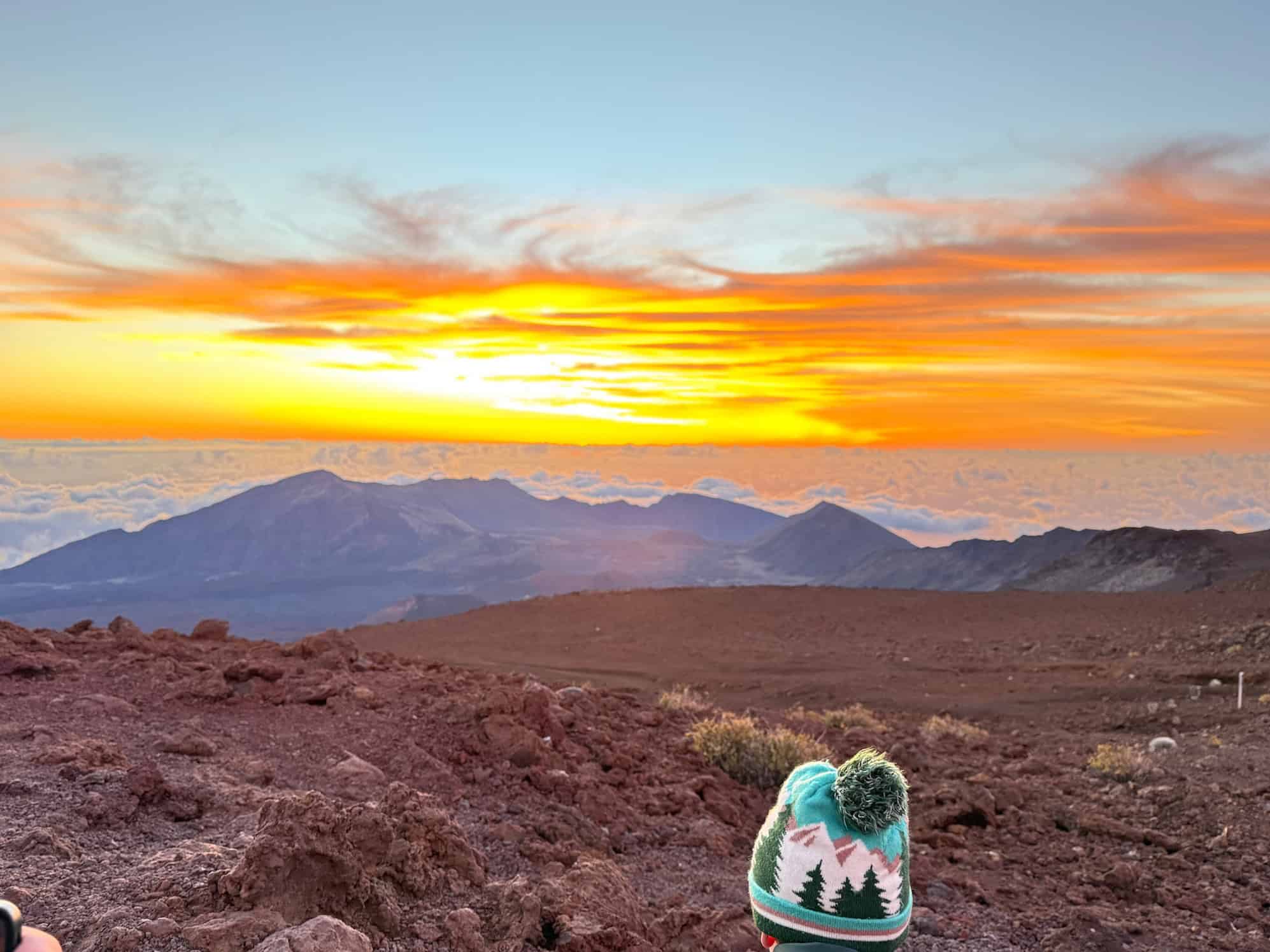
How to Camp at Haleakalā National Park (and Watch the Sunrise Without a Reservation)
After 33 national parks, I thought I had a pretty good sense of what to expect when we pulled into a new one. Haleakalā proved me wrong in the best possible way. This is the one that made me cry at 5am on the rim of a volcano while my kids stood completely still next to me which, if you have kids, you know is its own kind of miracle.
We visited Haleakalā as part of our Hawaii spring break trip, and if you’re planning a Maui visit, this park deserves more than a quick stop at the summit. Here’s how we did it, what surprised us, and what I’d do differently next time.

Getting to Haleakalā
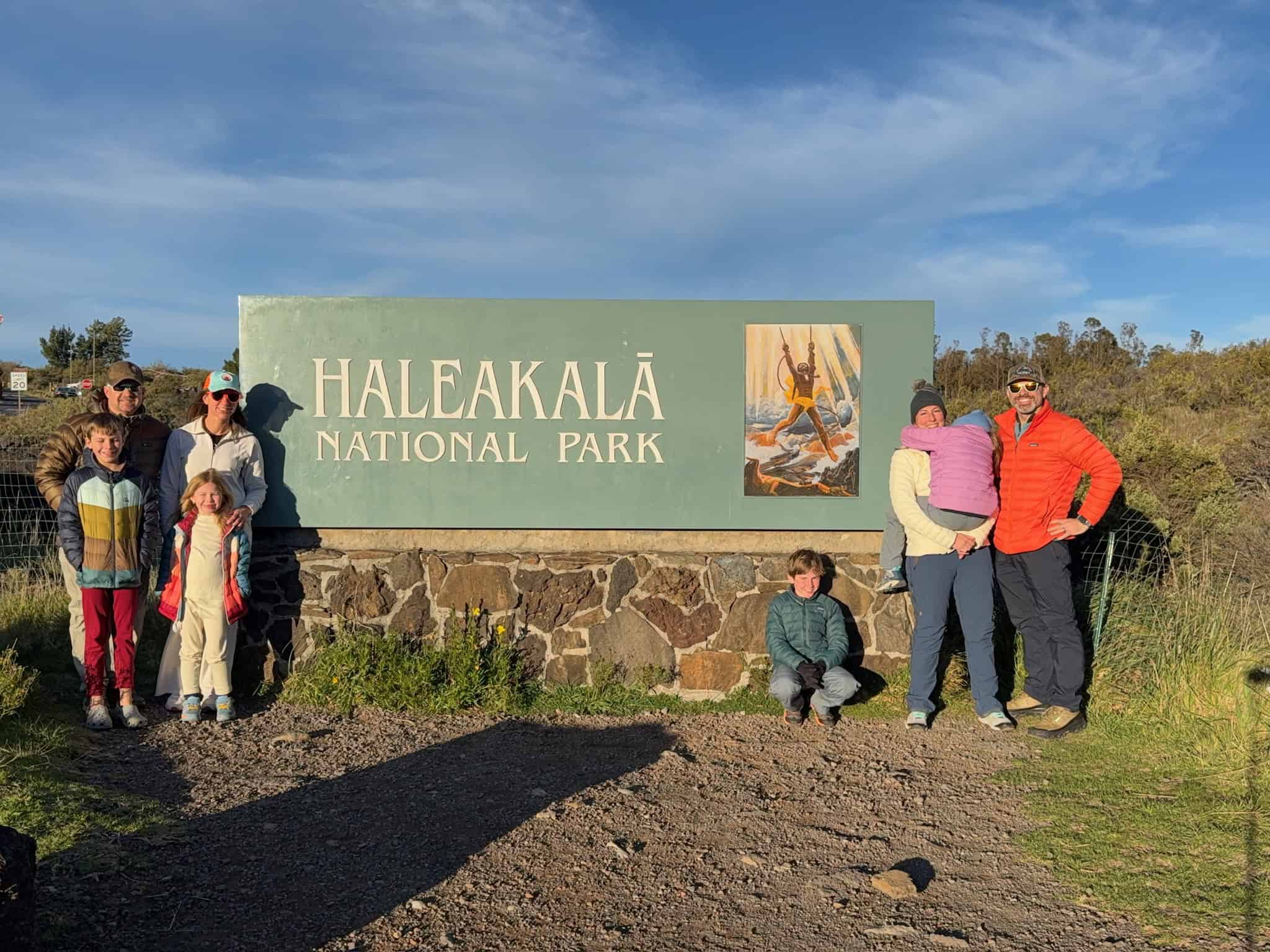
Haleakalā sits on the eastern side of Maui. The drive to the summit on Hwy 378 takes about an hour from the coast and climbs nearly 10,000 feet — your ears will pop, the temperature will drop fast, and the landscape shifts completely as you go up. The park sign sits on the right side of the road about 10 miles after you turn onto Hwy 378, just before the entrance station. Worth a stop for “the photo”!
A few things to know before you go:
- The Headquarters Visitor Center is open 8:30am to 4:30pm.
- The Haleakalā Visitor Center at the summit was closed for restoration during our visit. Check NPS.gov for current status before you go.
- Park entry is card or app payment only — no cash accepted.
- An America the Beautiful Pass covers entry and is worth it if you’re visiting multiple parks.
How We Watched the Haleakalā Sunrise Without a Summit Reservation
Summit sunrise reservations at Haleakalā are competitive and tend to go quickly — check recreation.gov well in advance for current availability. If that window closes on you, here’s what worked for us.
We booked Hosmer’s Grove campground, which sits at 7,000 feet inside the park. Reservations open 30 days out and are much easier to get than a summit permit. We left camp at 4:30am, drove to the top in the dark, and got the last two parking spots. It worked.
What to know about Hosmer’s Grove:
- Elevation: 7,000 feet — cold at night, much colder than the coast
- No showers, vault toilets, and a water station on site.
- Reservations required — print your confirmation and bring it with you.
- Short nature trails leave right from the campground.
- The surrounding forest is non-native cedar, spruce, and pine — unusual and worth a short wander.
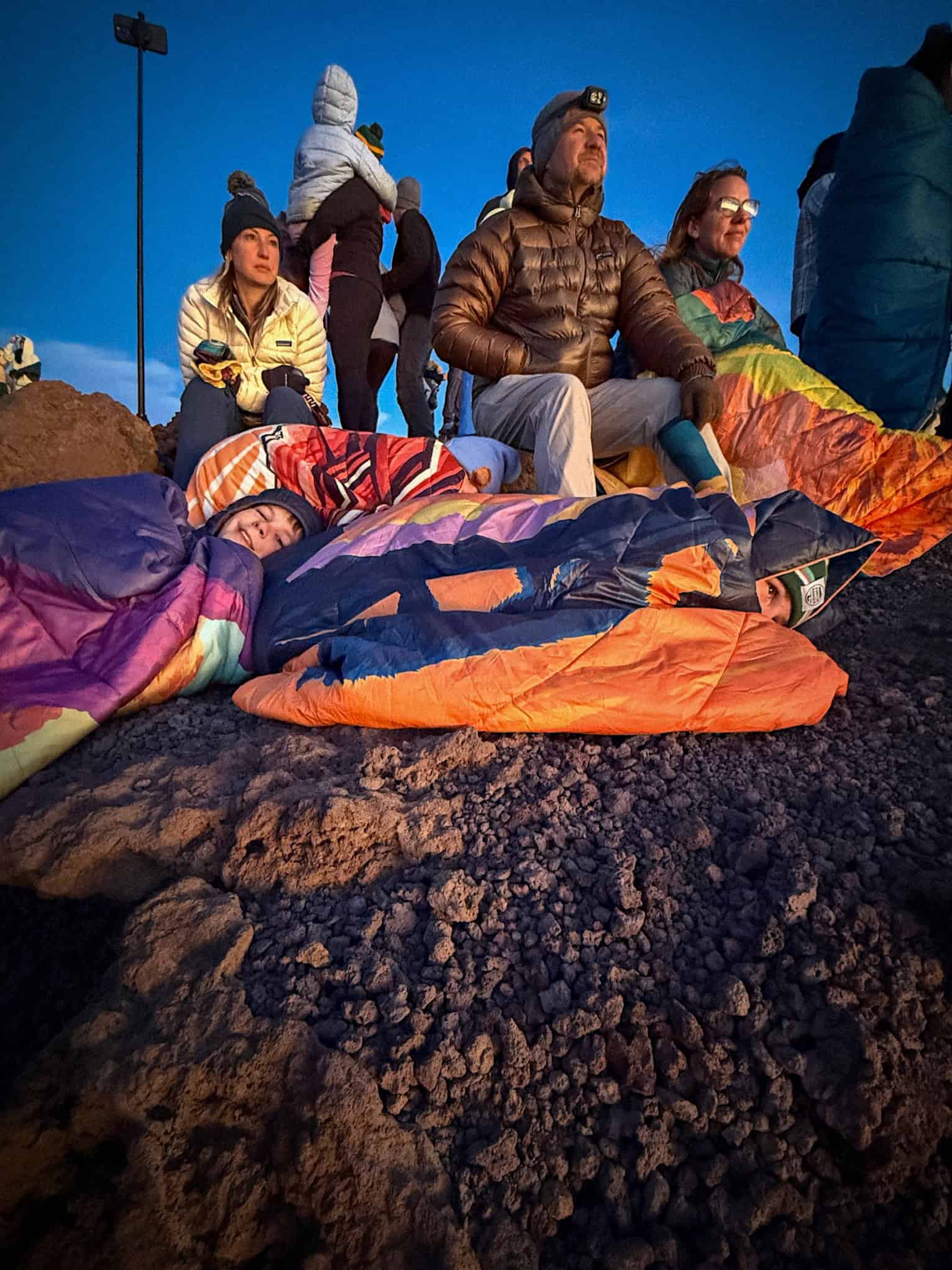
Bring hand warmers. Bring more layers than you think you need. Bring blankets. We’ve been in cold places and we were still surprised by the wind at 10,000 feet at 5am.
The Sunrise
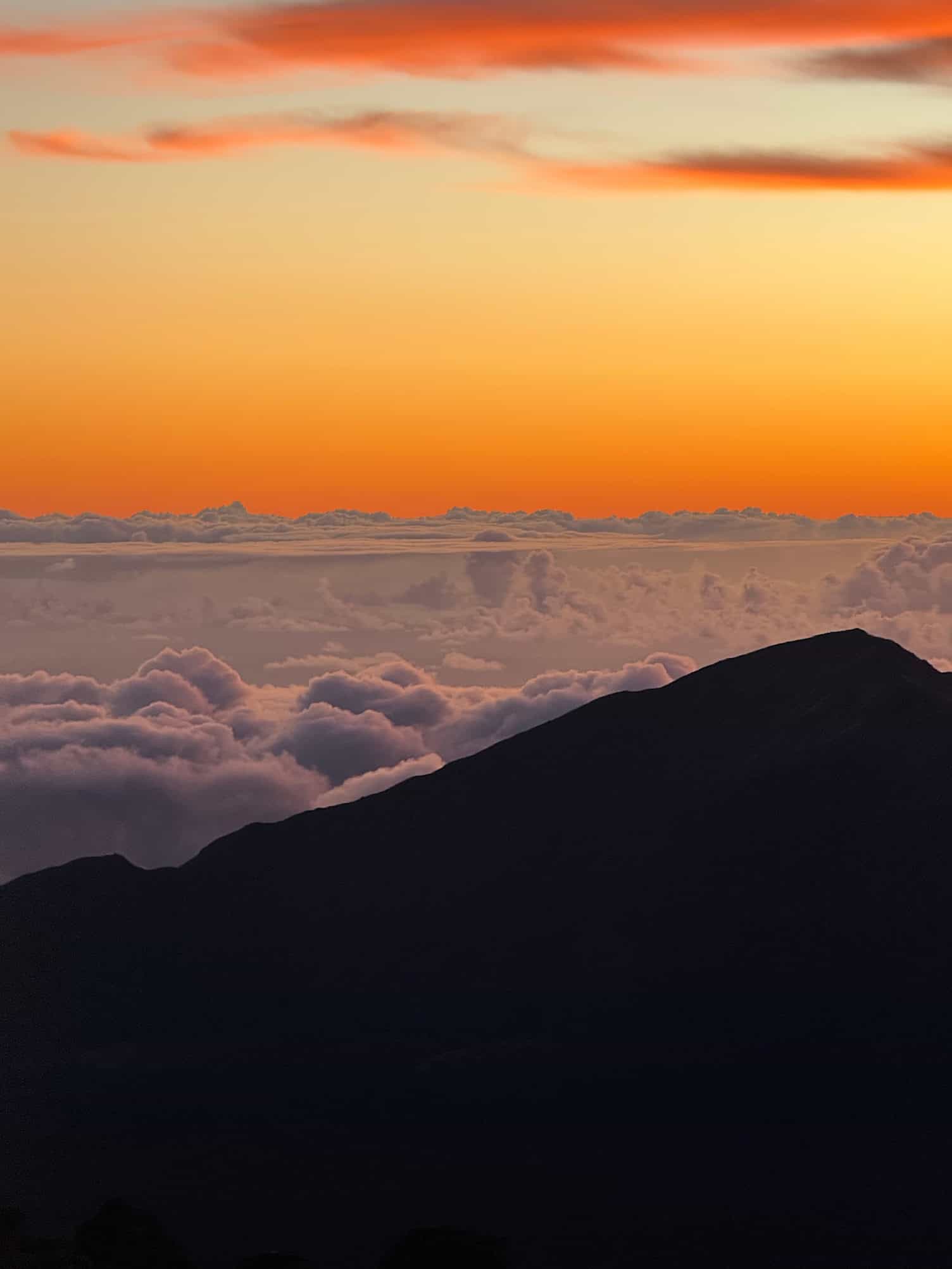
I’ve seen a lot of sunrises. I was not prepared for this one.
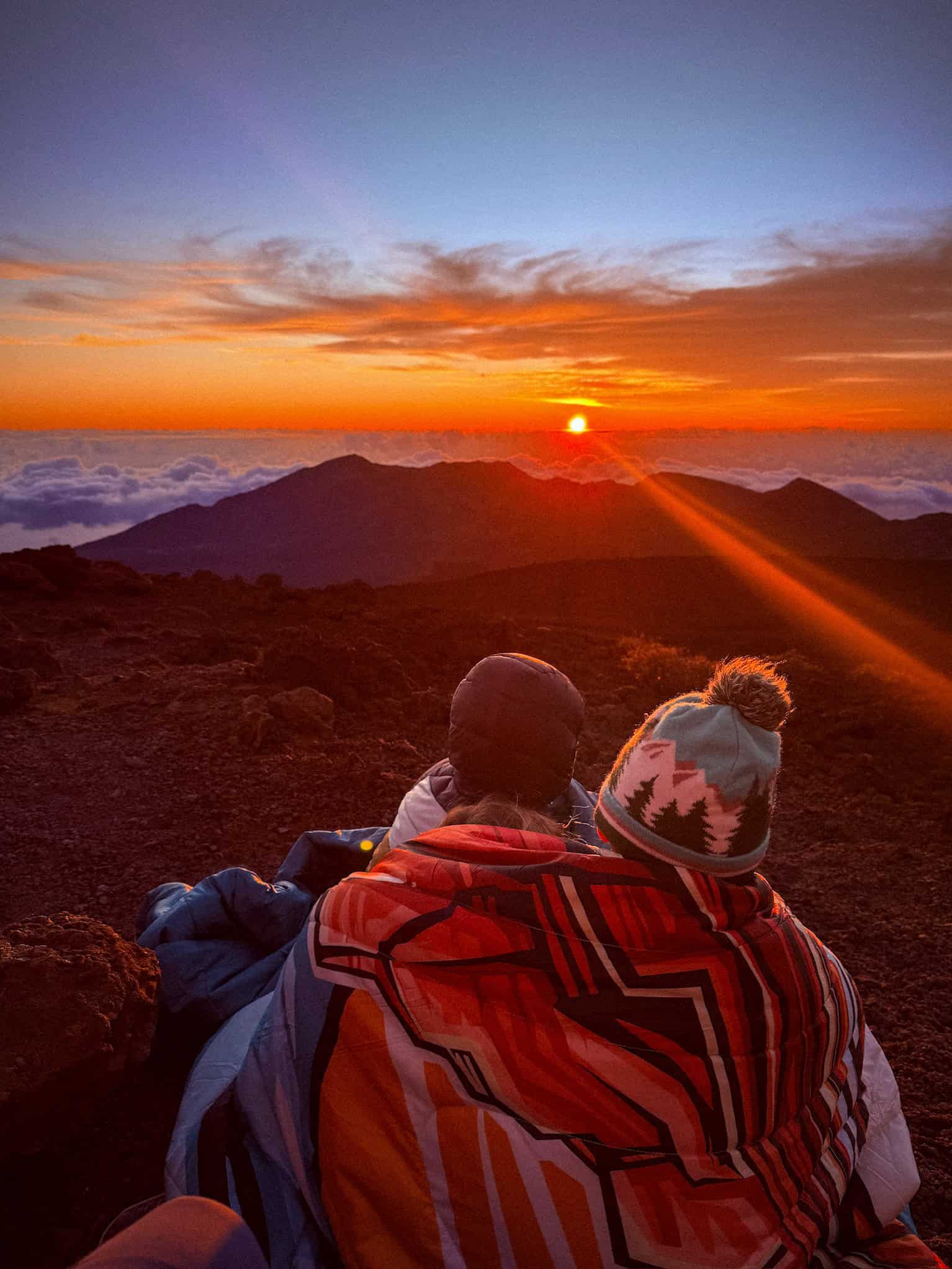
When we walked up to the summit rim in the dark, students from Hana High School were already there performing E Ala E, a traditional Hawaiian chant to greet the sunrise. Nobody warned us it was coming. Nobody had to explain to our kids that this was sacred — everyone just went quiet and watched.
Tears were running down my face before I understood why. It wasn’t about knowing the words or the language. It was something older than that — the feeling of genuine gratitude for a new day, from people who have been greeting the sun from this mountain for centuries. We were strangers standing at the edge of a volcano at 10,000 feet, and for a few minutes we were all exactly the same.
The sunrise itself was gradual. Deep purple and blue giving way slowly to orange and gold above a sea of clouds. The photos don’t do it justice. Some things you just have to go see.
Park 32. One of the most spiritual moments of my life, in a national park, with my kids. This is why we go.
After Sunrise: What We Did
After the summit we drove down to Upcountry Maui for breakfast at Kula Bistro, which I’d recommend to anyone, especially after waking up at 4am. From there we headed into the Road to Hana, which gets its own full post because it absolutely deserves one. Check it out if you’re planning the same combination.
What Else to Do in Haleakalā National Park
We didn’t get to everything in the park. Here’s what’s on the list for next time and what I’d build into your itinerary if you have more time than we did.
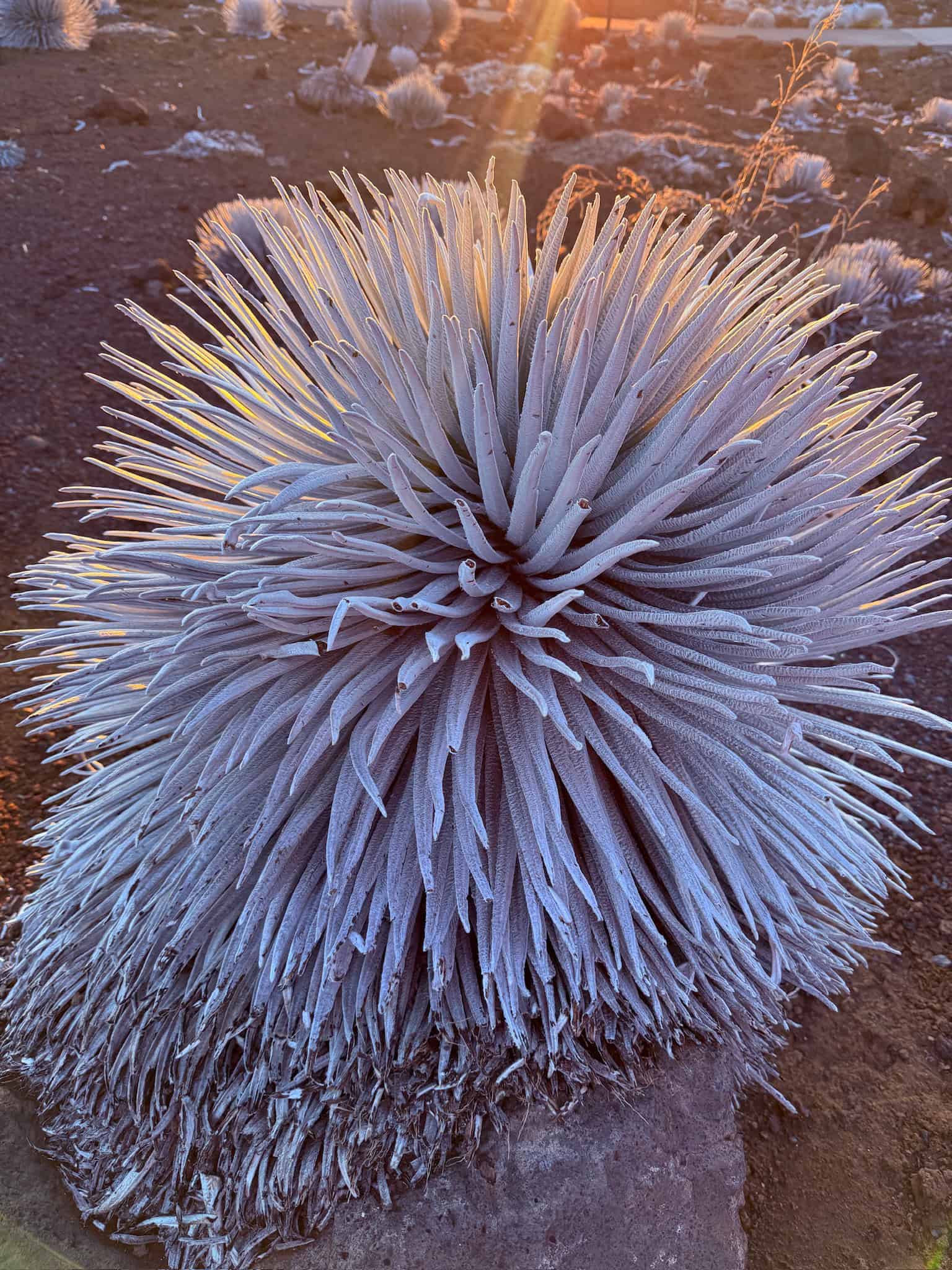
Sliding Sands Trail (Keoneheʻeheʻe) The iconic Haleakalā hike. It drops into the crater from the summit visitor center and the landscape is unlike anything on earth — volcanic cinder cones, silversword plants, and total silence. The trail is 11 miles round trip to the crater floor but even a mile or two in gives you a completely different perspective than the rim. Start early, bring plenty of water, and remember every step down is a step you have to climb back up at altitude.
Halemauʻu Trail A less crowded alternative that also enters the crater, this one from a lower trailhead. At 4 miles round trip to the crater rim it’s more manageable for families with younger kids and the views across the crater are spectacular. You can combine it with Sliding Sands as a through-hike if you have a car shuttle.
Hosmer’s Grove Nature Loop A short, easy 0.5-mile loop right from the campground through the non-native forest. Great for kids, great for morning or evening when the light is good, and it gives you a feel for how unusual this ecosystem is.
Ranger-Led Programs Check the NPS app or the visitor center board for current ranger programs — stargazing talks at the summit are offered on some evenings and given the elevation and lack of light pollution, the sky up here is extraordinary.
Kīpahulu District The other side of the park entirely, accessed via the Road to Hāna rather than the summit road. This is where Pipiwai Trail and the Oheʻo Gulch pools are located. The waterfalls, bamboo forests, and some of the most dramatic scenery in the park can be seen here. The Kīpahulu Visitor Center is open 9am to 5pm. We covered this section as part of our Road to Hana trip.
Where to Stay
Inside the park
- Hosmer’s Grove — our pick for the sunrise strategy, reservations at recreation.gov
- Wilderness camping
- Holua Campground — inside the crater, wilderness camping, permit required
- Palikū Campground — remote, lush, on the far end of the crater, permit required
- Wilderness Cabins – still require a minimum of 3.7 miles of hiking, but it’s an amazing opportunity to stay in the crater
Outside the park
The Upcountry Maui towns of Kula and Makawao put you close to the park entrance without the altitude. For a coastal base, Paia is charming, walkable, and about an hour from the summit — we grabbed dinner at Paia Fish Market and it was the right call.
What to Pack
Haleakalā requires layers no matter what the rest of Maui looks like when you leave in the morning. Here’s what we’d bring:
- Insulated jacket — non-negotiable at the summit
- Beanie and gloves — yes, even in spring
- Hand warmers — specifically for the sunrise
- A blanket for sitting at the rim while you wait
- Sunscreen — the UV index at 10,000 feet once the sun is up is serious
- Plenty of water — none available at the summit
- Extra layers for the kids — pack them, you’ll be happy you did
For our full family packing system, we wrote a whole post on how we fit four people and ten days into two suitcases.
Tips Before You Go
- For sunrise without a reservation, book Hosmer’s Grove 30 days out and plan to leave camp by 4:30am
- Check recreation.gov well in advance for summit sunrise reservation availability
- Weather changes fast at altitude — check the forecast the night before
- Cell service is limited on the mountain, download offline maps before you leave
- The park entrance is card or app payment only
Bottom Line: Haleakalā Sunrise
Haleakalā was supposed to be a sunrise on a volcano. It turned into something much more than that. Something I’ll carry for a long time. Give it more than a morning if you can. The crater deserves a day, the camping deserves a night, and the sunrise deserves a moment of silence.
With light and love, Amber 🌿
